Showing posts with label tile cleaning. Show all posts

Wednesday, August 28, 2024

Newport Tile Doctor Details the Restoration of Victorian Floor Tiling

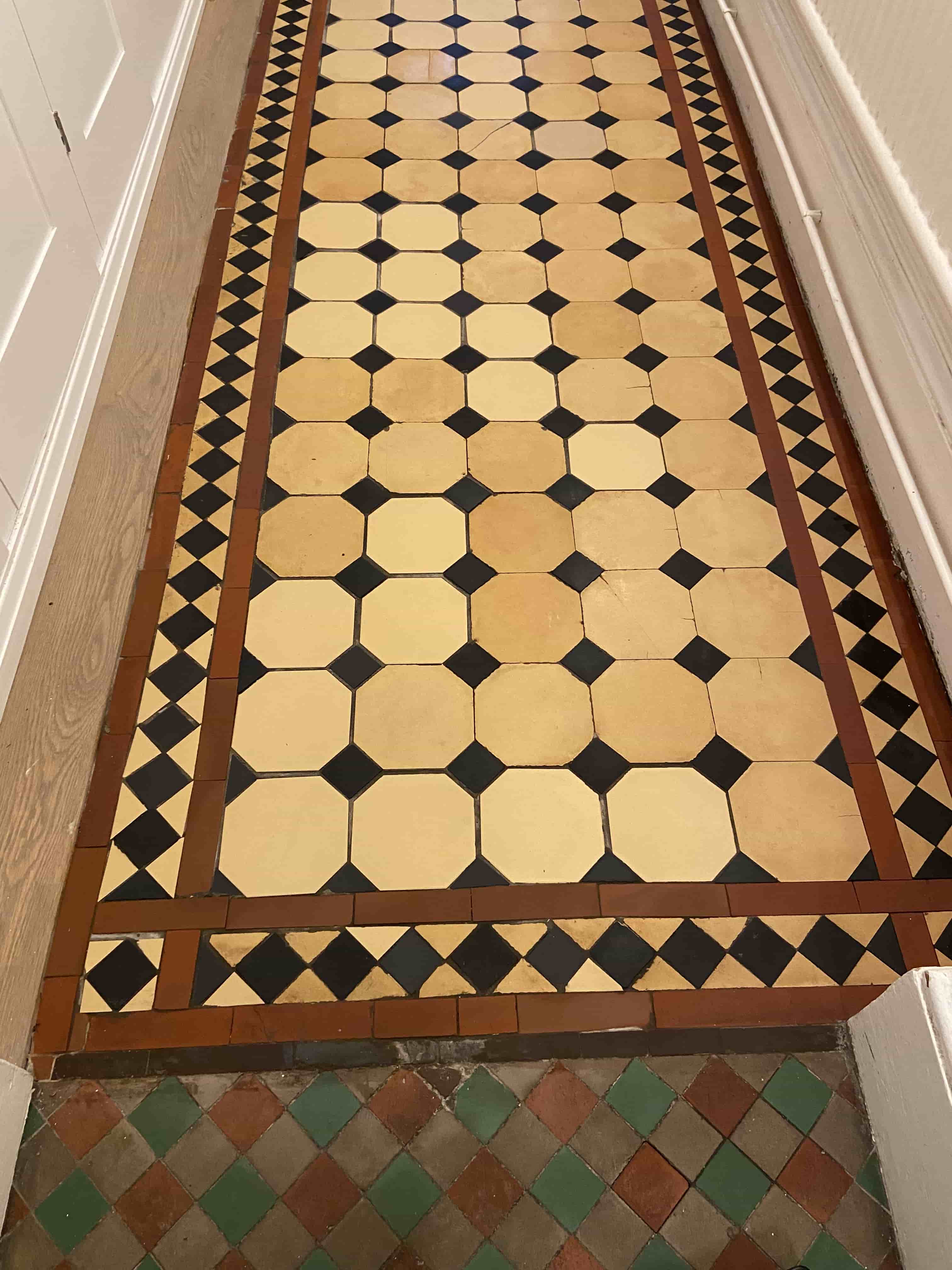
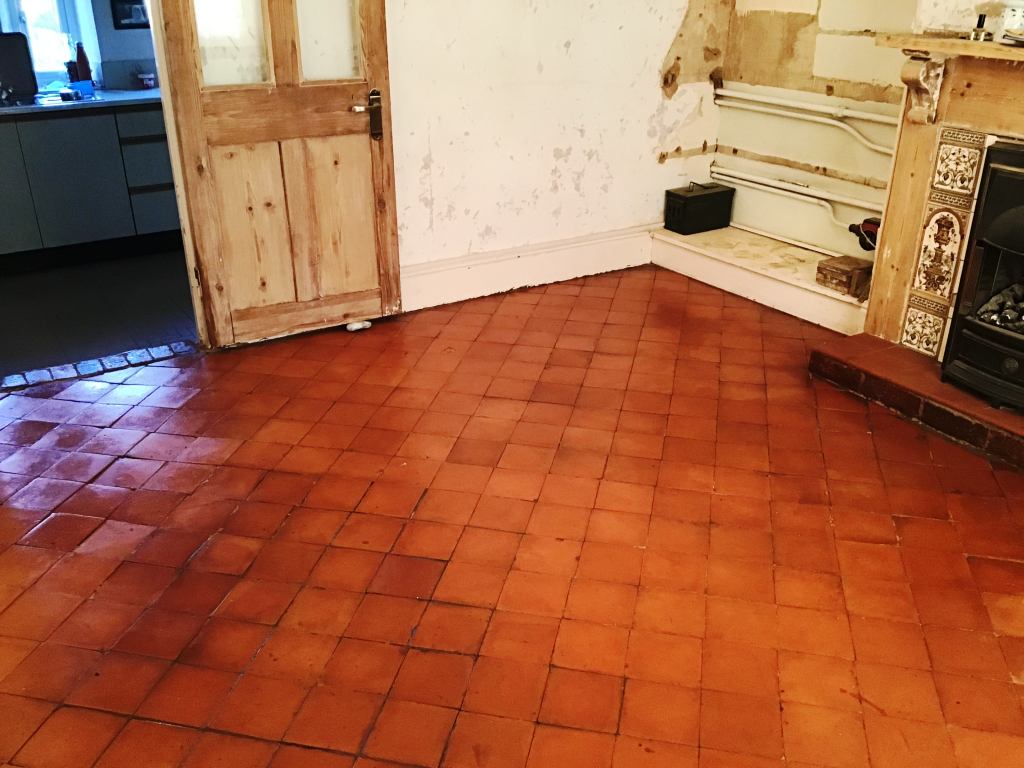
The client had lived at this property in Newport for a few years and decided that it was finally time to sort out the Victorian tiled floor in the dining room. Some repairs were needed in a few areas and the sealer was fading and due for replacement.

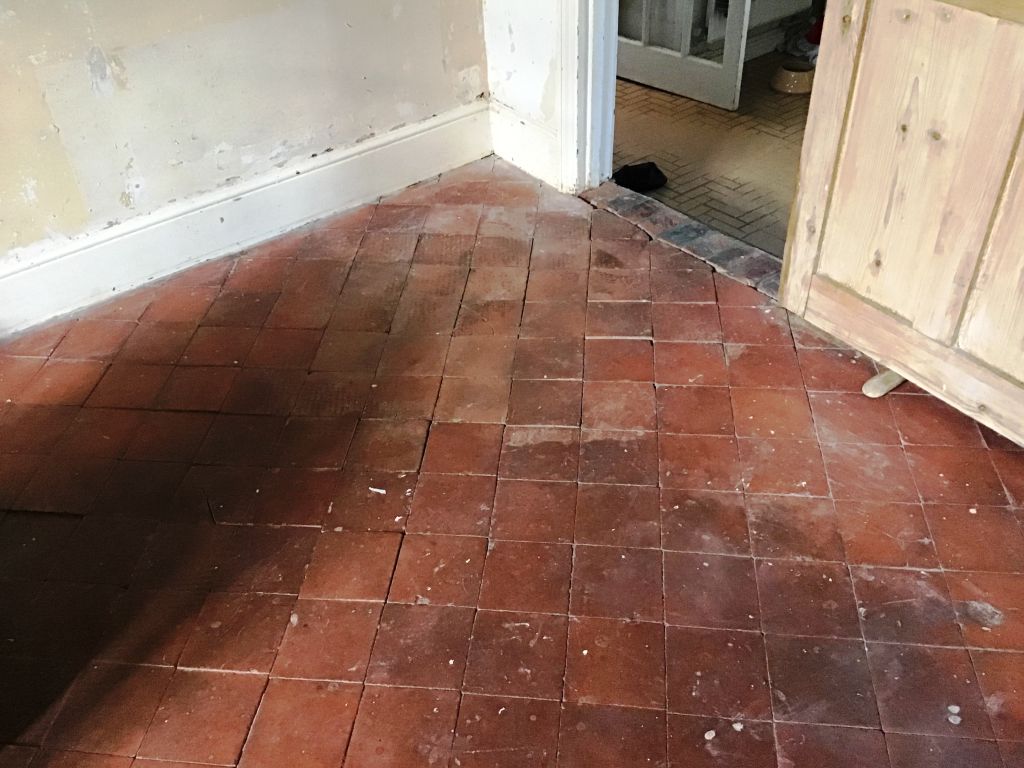
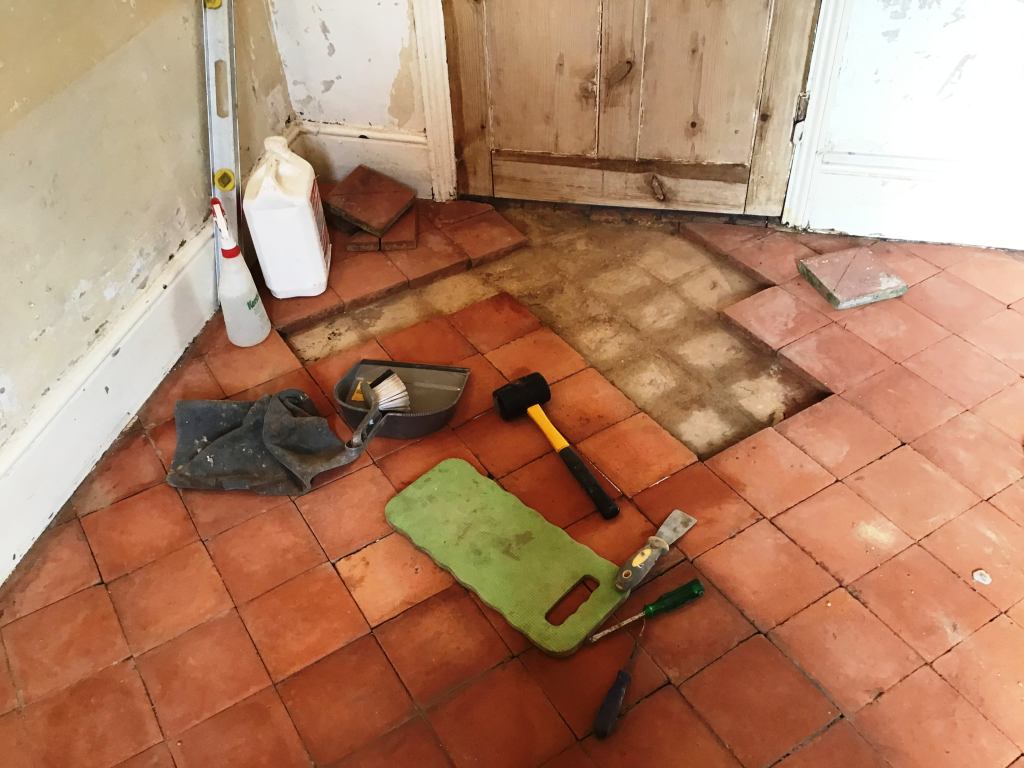
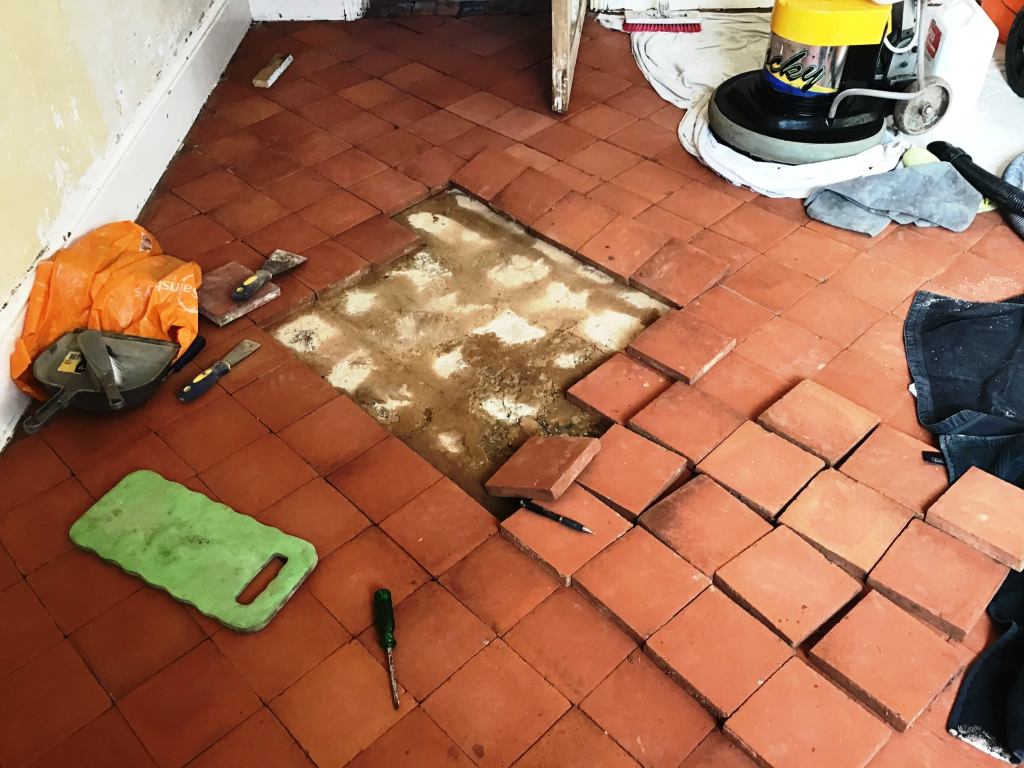
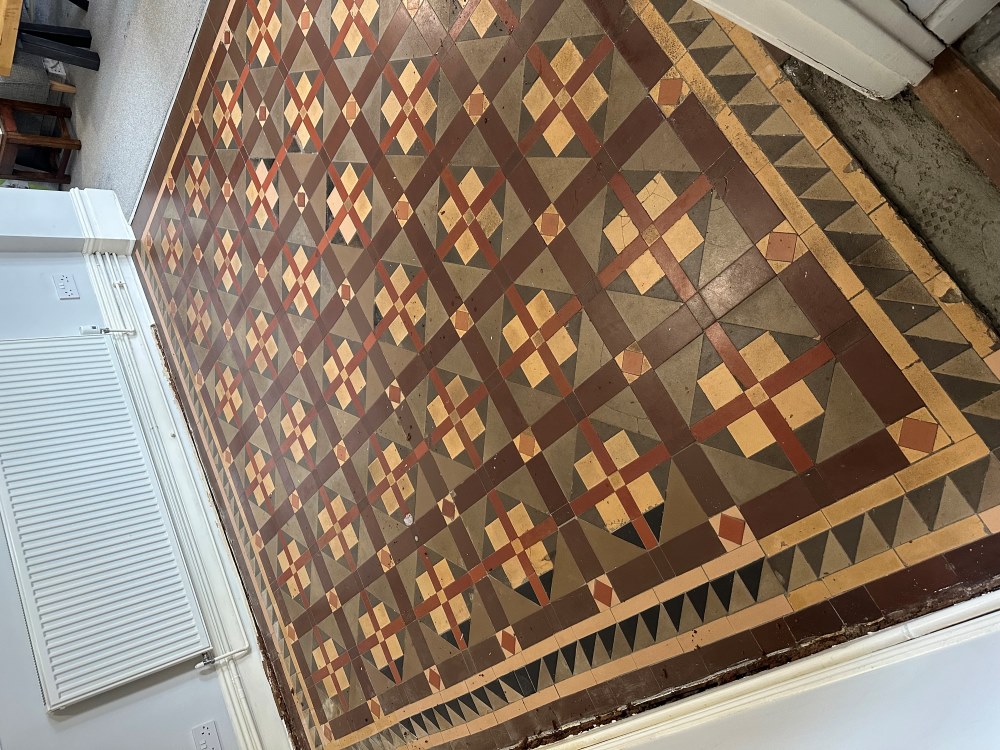
Victorian Tiled Dining Room Floor Before Renovation Newport

I went over to the property to survey the floor and advised that with repairs, cleaning and sealing the process would take two and a half days. Having worked on many many floors like these before I was very confident that we could repair the floor where needed and restore its appearance.

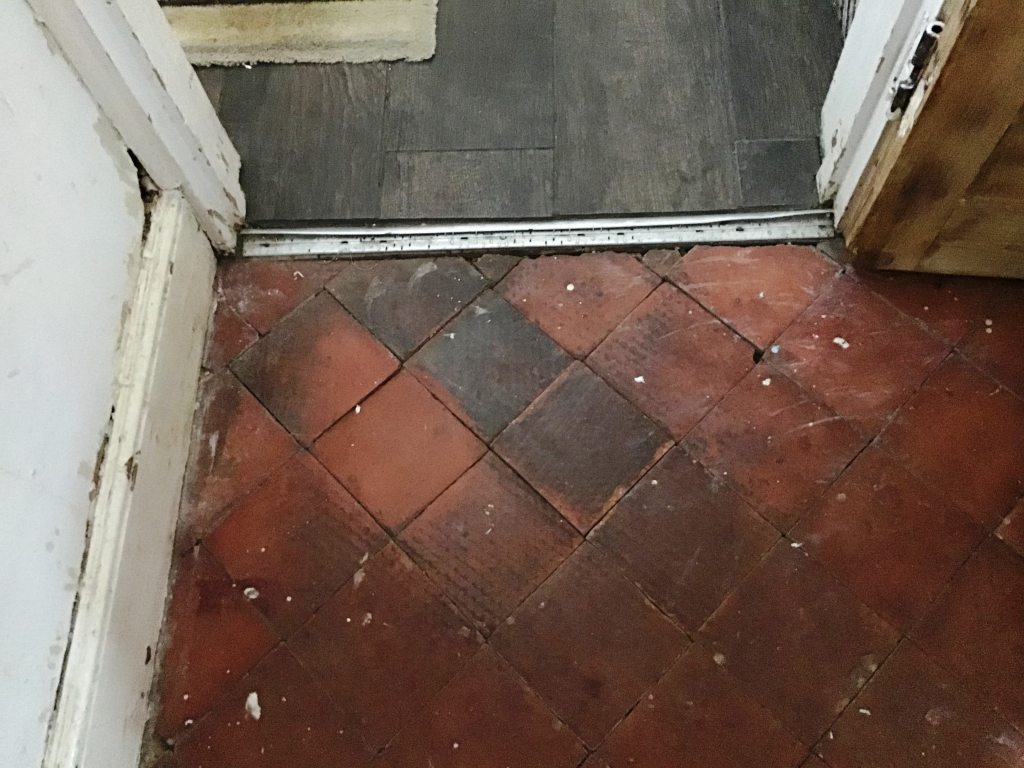
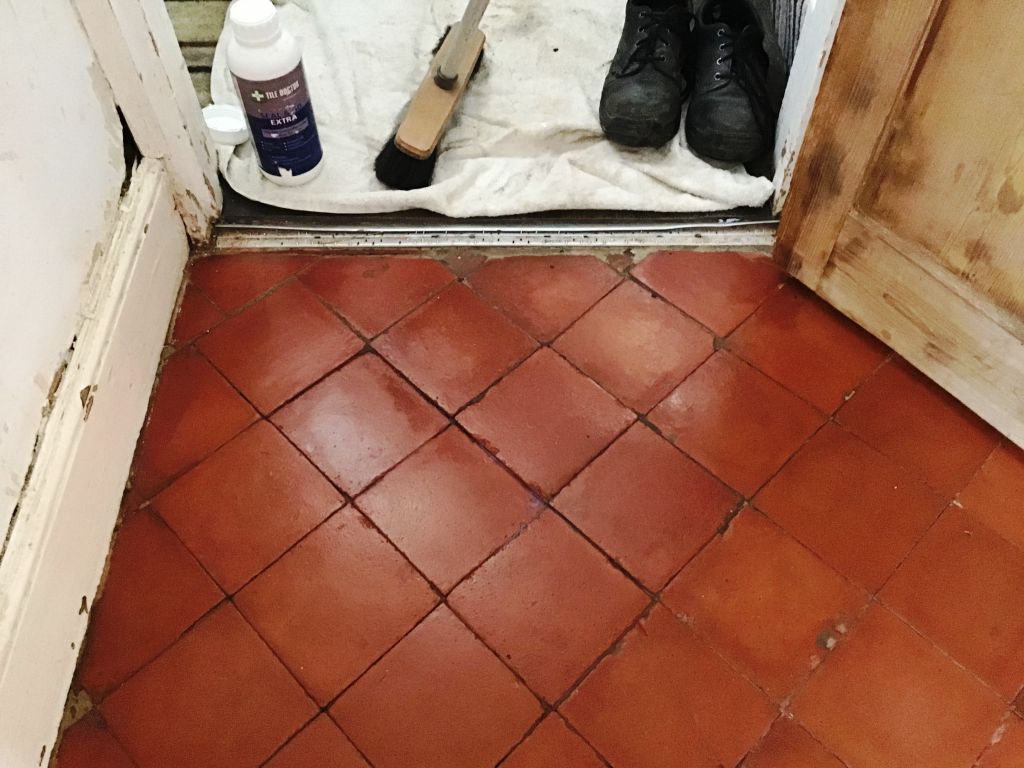
During the visit I noticed that at the door threshold leading into the kitchen, some of the tiles had been taken up for a gas pipe repair and back filled with cement, I suggested I could repair this section using matching tiles, so I included it in the quote. The quote to renovate and repair the floor was accepted and the job was booked in.
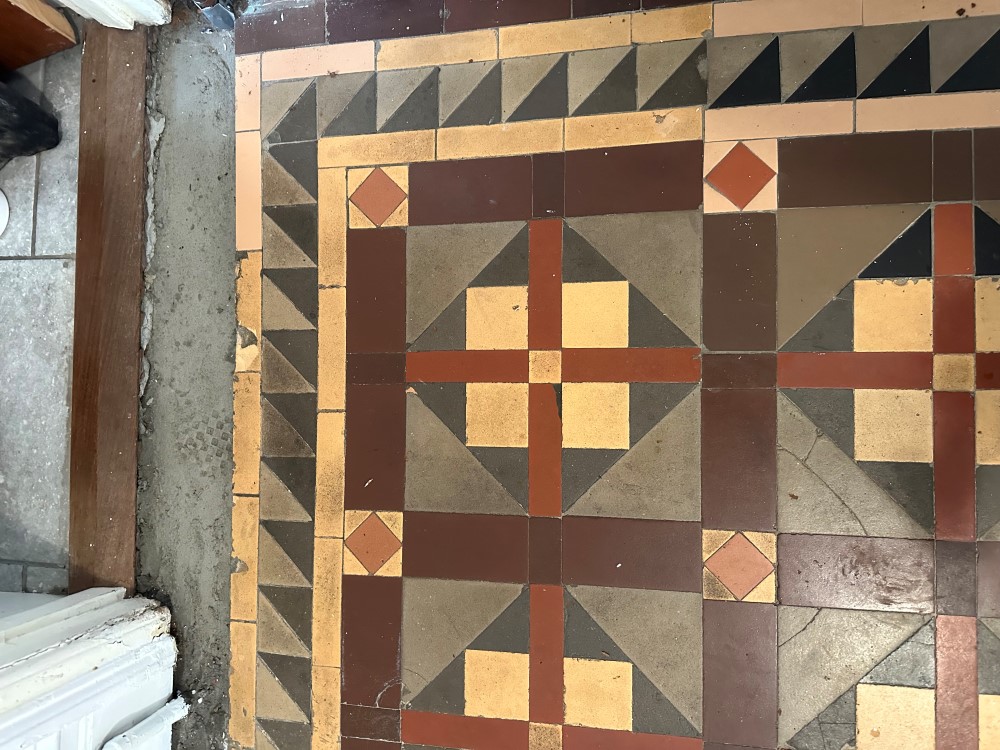
Victorian Tiled Dining Room Floor Before Renovation Newport


Cleaning and Repairing a Victorian Tiled Dining Room Floor

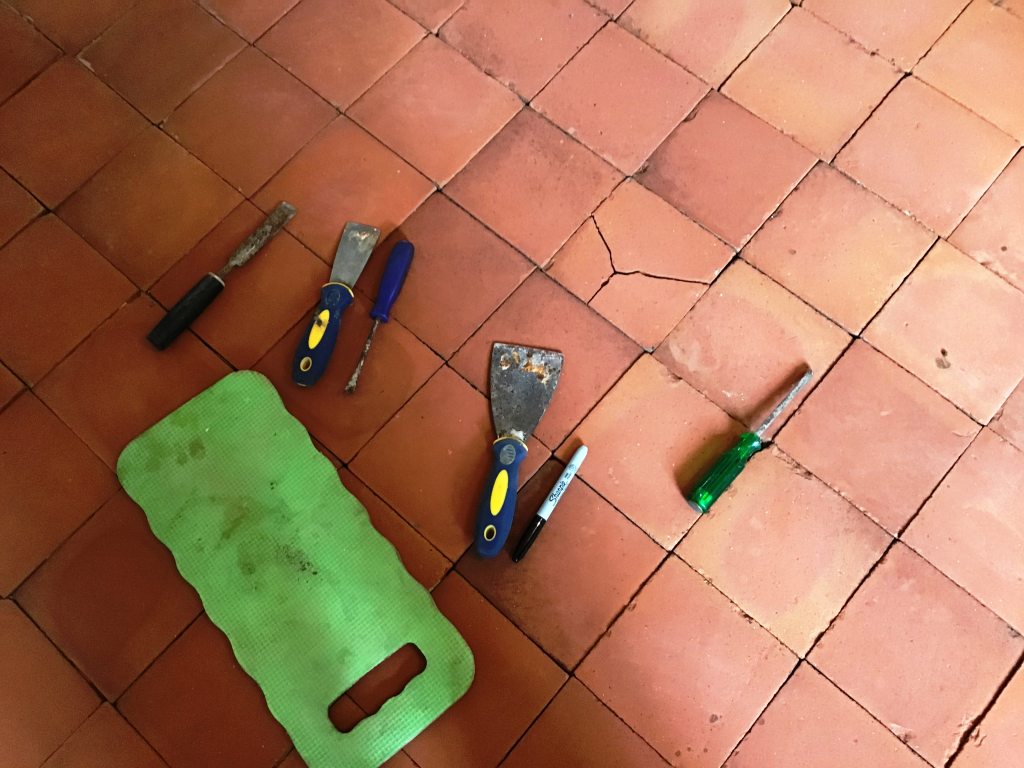
I began by addressing the tiling issues so my first course of action was to set matching tiles along the doorway border leading to the kitchen, as the previous tiles had already been removed by the gas company it was fairly straight forward job of carefully knocking out the cement. The tiles I had sourced were from a nearby reclamation yard and needed to be carefully cut to size to ensure a good fit with the original. After setting the tiles and grouting I left them to dry overnight.

The following day I began cleaning, using a combination of Tile Doctor Remove and Go and Pro-Clean, leaving the solution to dwell after being brushed into the floor. After around ten minutes the floor was scrubbed by hand with a stiff brush to release the dirt from the tiles. The resultant slurry was then vacuum away and with the floor cleaner I was able to get a better idea of which areas needed more attention.

I restored the perimeter of the floor with a 200-grit diamond block and this was followed up with a 200-grit diamond pad fitted to a rotary machine. These coarse pads cut into the tile surface removing years of grime and giving them a new lease of life. After another rinse and extraction with the wet vacuum the whole floor had a much brighter appearance. The process was then repeated with a 400-grit diamond pad to close the pores of the tiles.

The floor was then washed by hand with water and a sponge to make sure there wasn’t any areas missed, also to ensure there was no residue from the cleaning products left on the floor which could potentially disrupt the sealing process. The floor was then left to dry overnight ready for sealing the following day.


Sealing a Victorian Tiled Dining Room

To assist with drying I asked the client to leave a couple of air movers running during the evening and to put them back on in the morning. This worked well and by the next day I was able to confirm the floor was dry and ready for sealing with a moisture meter.

The client had requested a satin finish and so the sealer chosen was Tile Doctor Seal and Go, four coats were applied to the tiles a permanent wet look and gorgeous lustre. Another advantage of Seal and Go is that it’s a water-based sealer so it doesn’t give off a smell as it dries.
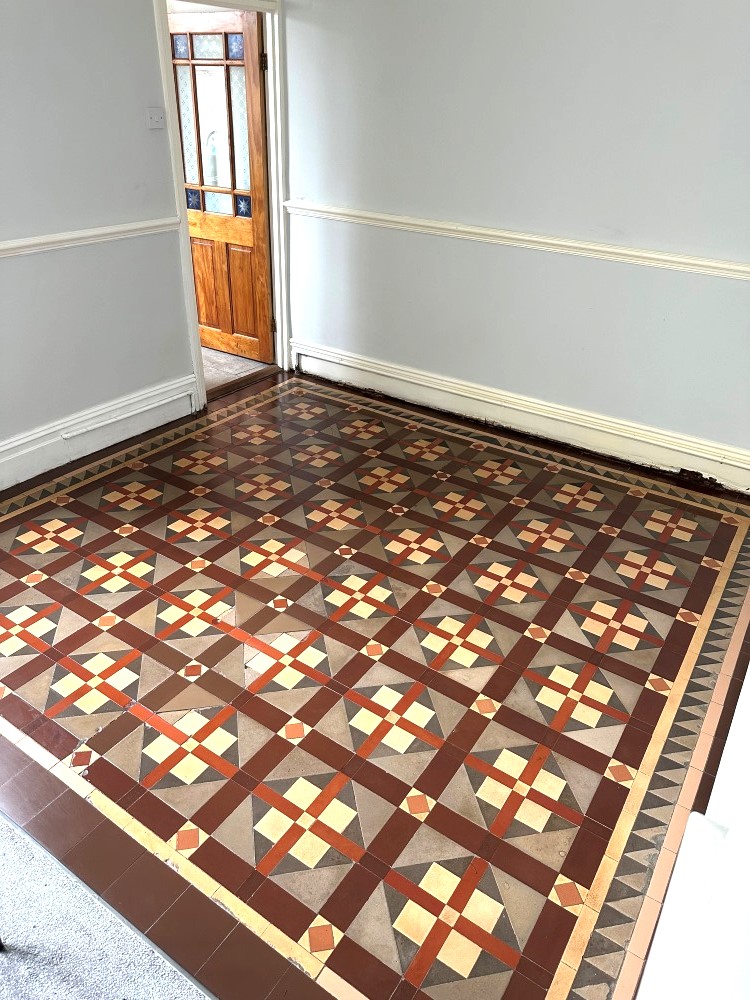
Victorian Tiled Dining Room Floor After Renovation Newport

For aftercare I left the client a bottle of Tile Doctor pH Neutral Tile Cleaner to help maintain the appearance of the floor. This is a gentle tile cleaning product that won’t harm the sealer, many of the products you find in supermarkets are simply too strong for a sealed floor.
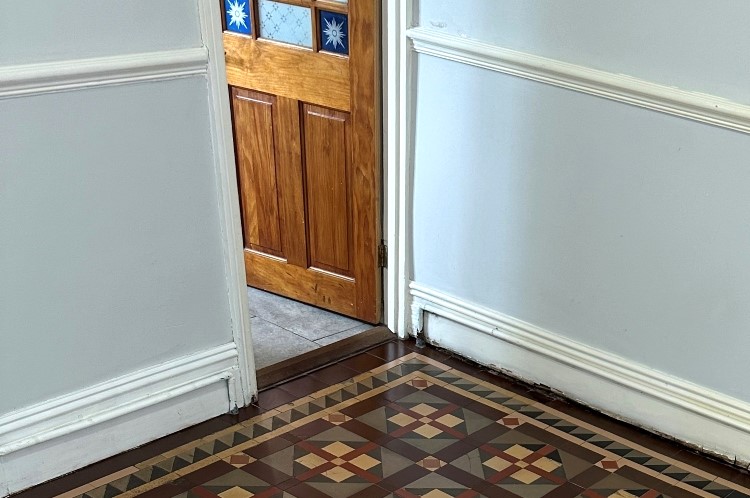
Victorian Tiled Dining Room Floor After Renovation Newport 


Monday, January 8, 2024

Maintaining a Historic 1850's Minton Tiled Floor in Cheshire

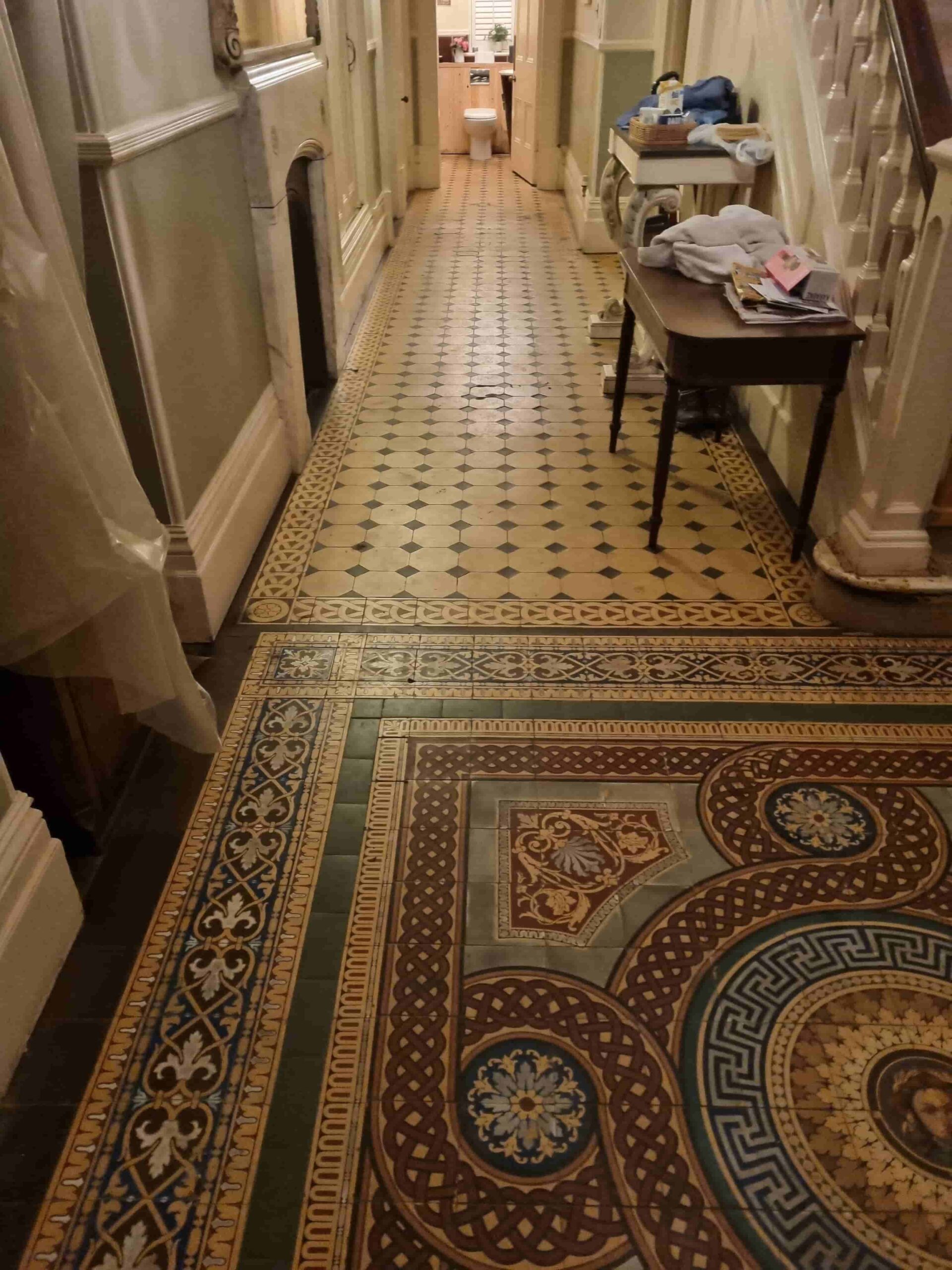
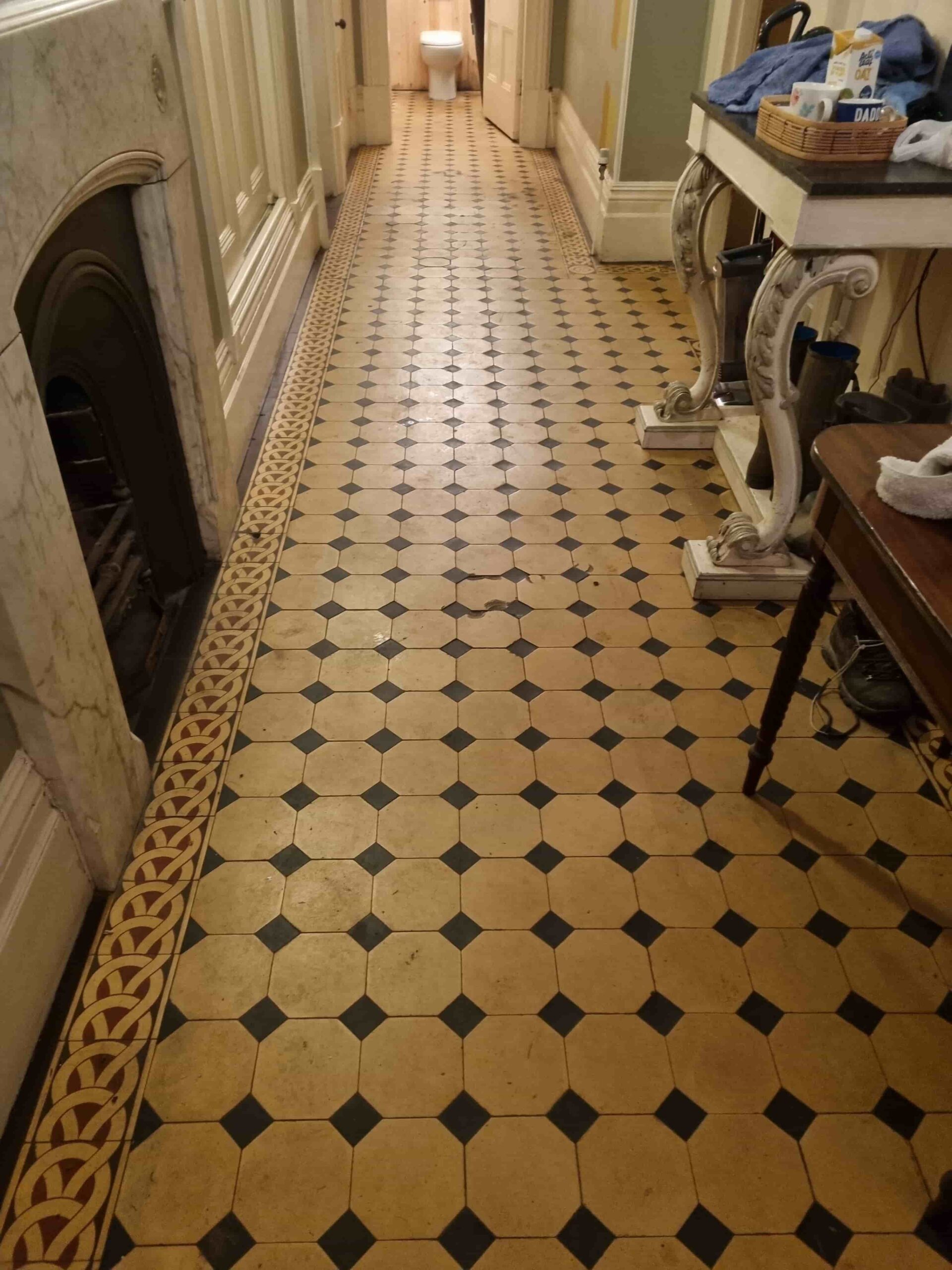
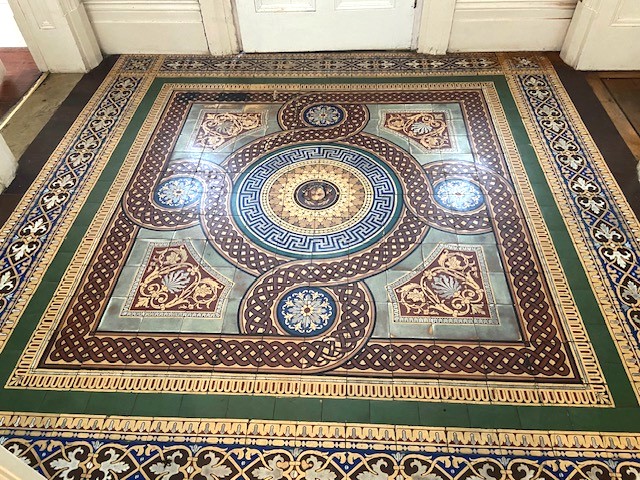
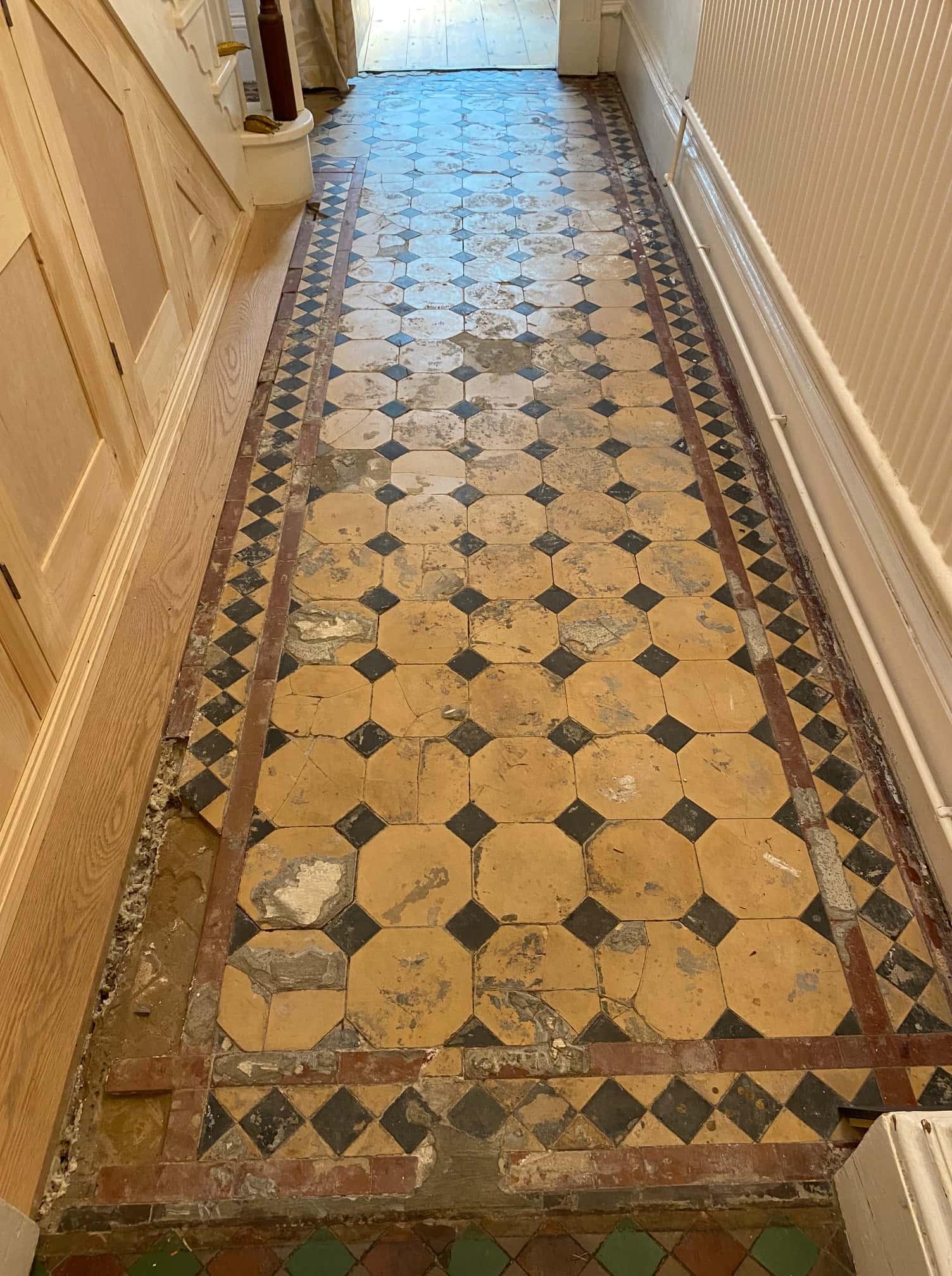
I was first asked to restore the large Victorian tiled hallway floor at this mansion type property in Handbridge, Cheshire two years ago. The floors had a lot of history and had been used as a template for the famous Minton Hollins encaustic tiled floor at St George’s Hall in Liverpool that was built in 1854. Unfortunately, however my work was put on hold as other restoration works including repairing dry rot took priority.

Victorian Tiled Floor Before Renovation Handbridge Cheshire

I kept in touch with the owners whilst the other works progressed and kept a look out for 22 beige Octagon shaped tiles that were needed to replace some of the damaged tiles in the floor. In fact, it wasn’t until later in 2023 that I was called back to start the renovation work to the floor, by which time I had managed to source all the replacement tiles needed.
     
Victorian Tiled Floor Before Renovation Handbridge Cheshire Victorian Tiled Floor Before Renovation Handbridge Cheshire
Handbridge is a district of Chester with a mixture of large Victorian mansion type properties on the South bank of the river Dee and workers cottages built to service the water powered factories that sprung up along the river.

Repairing and Cleaning a Victorian Hallway Tiles

Before starting the cleaning process my first task was to replace all the broken tiles. This needs to be done carefully so as not to dislodge any adjacent tiles and make more work for myself. Once removed the base is cleared of old cement and then the replacement tiles fitted using rapid set adhesive and cut to size where required.

Once the repairs were complete and the adhesive set, I began the cleaning process which is designed to remove and remaining protective sealer and flush out ingrained dirt from the pores of the tile. This is done by applying a strong dilution of Tile Doctor Pro-Clean with a mop and then leaving it to soak into the tile for ten minutes. The floor was then scrubbed using a buffing machine fitted with a black pad and lubricated with water. The cleaning alkaline cleaning solution soon turns black with the dirt and then floor is then rinsed with water and the residue extracted with a wet vacuum.

Attention then turned to the decorative historical piece of flooring at the entrance to the hallway. This only needed to be cleaned with Tile Doctor Neutral Tile Cleaner which is used for regular cleaning and maintenance of tiled floors. this was applied with a two-minute dwell time before cleaning by hand using soft scrubbing brush then wiped down with damp microfiber cloths then left to dry.

Sealing a Victorian Tiled Hallway Floor

The next day damp meter readings were taken from both floors to make sure they had dried and were ready to be sealed. The readings were within tolerance so work could begin on applying the first of what would be three coats of sealer.

Tile Doctor Colour Grow was chosen to seal the tiles, it’s an impregnating colour intensifier sealer which is fully breathable so it will allow for moisture to rise through tile, an important consideration for old floors that don’t have a damp proof membrane.

The sealer was applied using a paint pad and any excess is wiped off after five minutes with microfiber cloths before leaving it to dry for twenty minutes. I use air blowers around the floor to increase the drying speed.
   
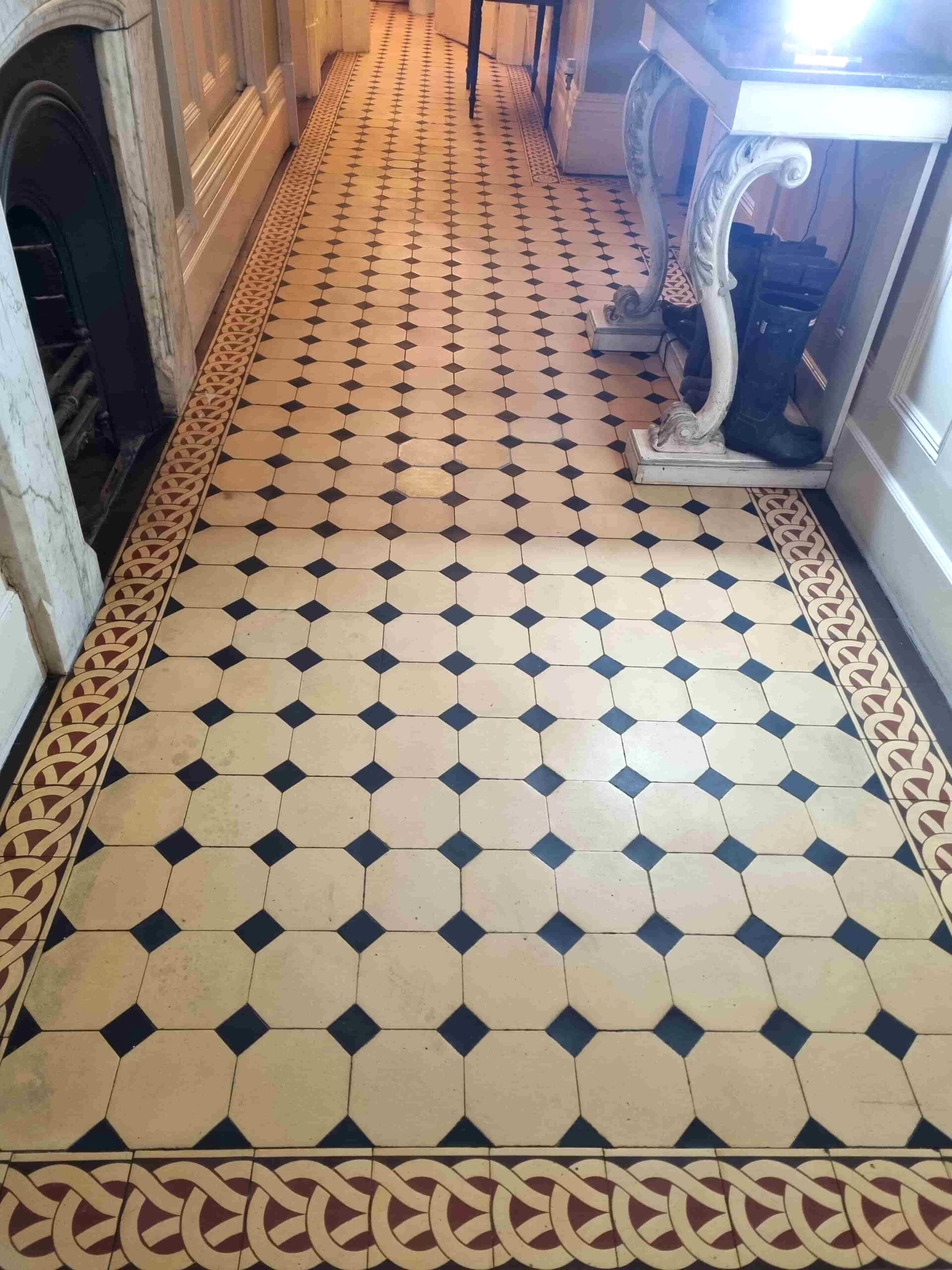
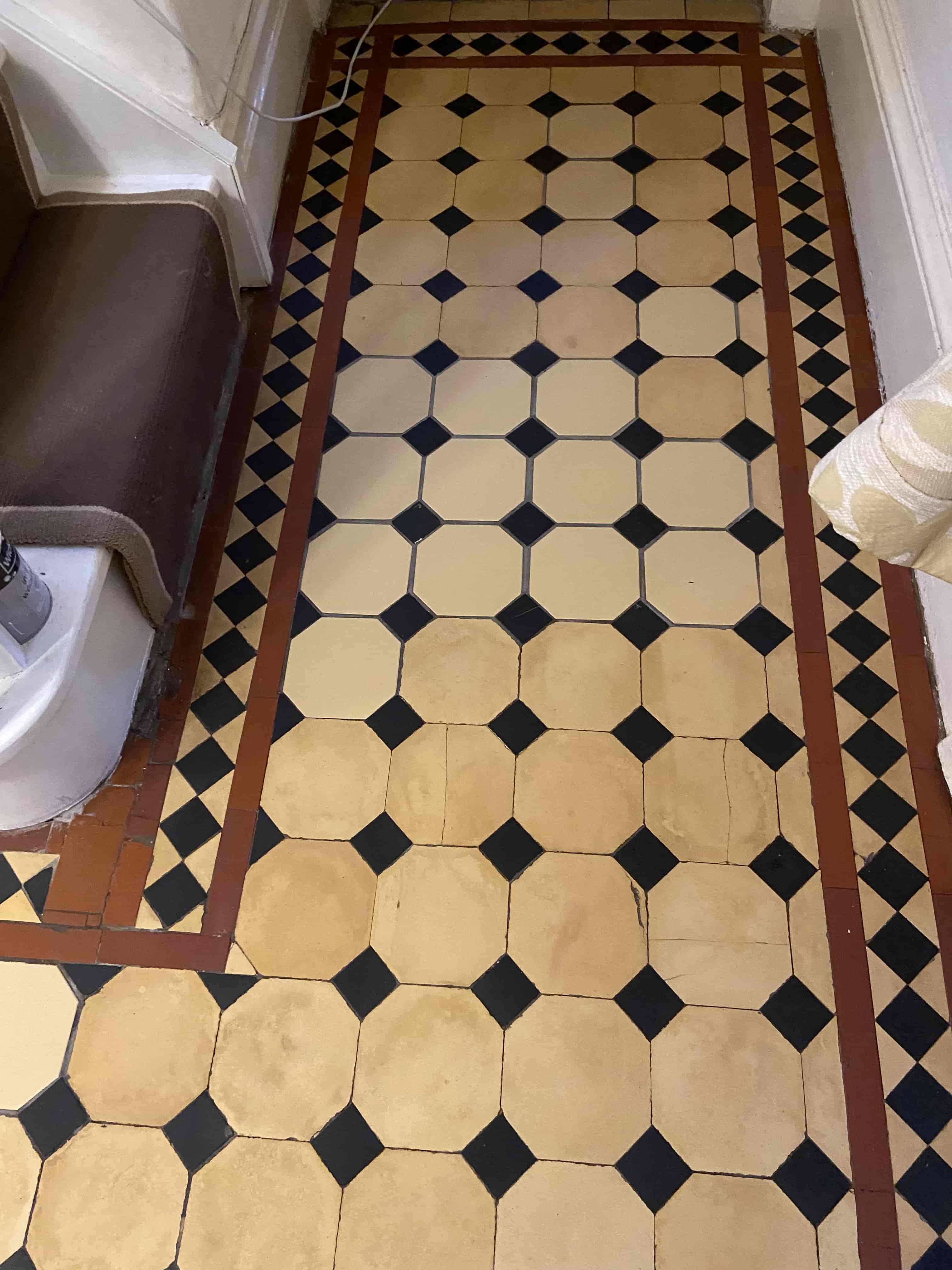
Victorian Tiled Floor After Renovation Handbridge Cheshire Victorian Tiled Floor After Renovation Handbridge Cheshire

The owner of the property was over the moon with the work and pleased that the work to restore the property to its former condition was nearing completion after what had been four years of restoration.
  Victorian Tiled Floor Before Renovation Handbridge Cheshire 

Sunday, August 13, 2023

How to Remove Excess Grout from Brick Slip Bathroom Flooring in Saxilby Lincoln

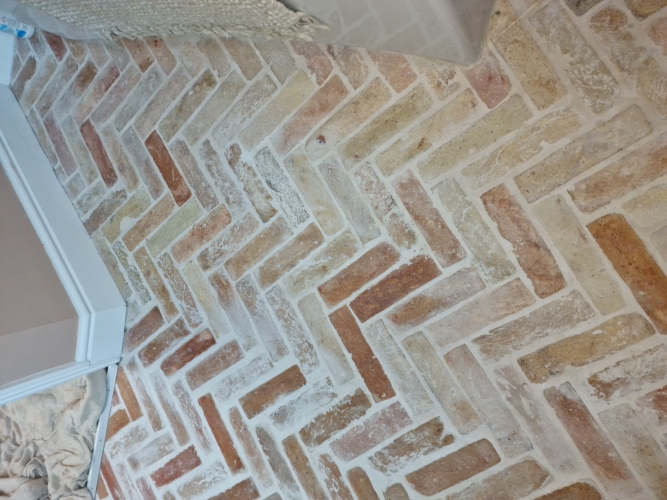
I was asked if I could improve the look of this new bathroom floor that had been laid with brick slips in a herringbone pattern at a property in Saxilby near Lincoln. The builder had done a solid job of laying the bricks but had been overzealous on the grouting and was unable to remove all of it resulting in a whitening of the red bricks due to grout haze. Unhappy with the appearance of their new bathroom floor and with little chance of resolution with the builder they contacted Tile Doctor to see what could be done to improve their appearance.
 
Brick Slip Tiled Bathroom Floor Before Cleaning Saxilby

Brick Slip tiles are basically a very thin brick which allows it to be laid like a tile, normally they are cut from an actual clay brick although there are other types. Thin like a tile and light weight they can be used to quickly create authentic looking brick walls and floors.

I visited the property to understand the problems and whilst I was there, I carried out a test clean to show the client what could be achieved. They were happy with what I showed them and booked me in to have the work done.
 
Brick Slip Tiled Bathroom Floor Before Cleaning Saxilby Brick Slip Tiled Bathroom Floor Before Cleaning Saxilby


Removing Grout Haze from Brick Slip Flooring

To remove the grout haze, I started off with an application of Grout Clean-up which contains phosphoric acid and is designed exactly for this purpose. It was a small space to work in so the product was scrubbed into the tile by hand until I got them as clean as possible. This was followed by a quick rinse and extraction with a wet vacuum.

I then inspected the floor and could see more work was required so this time I laid down Acid Gel which is a blend of Phosphoric and Hydrochloric acids and left it to dwell for ten minutes. After another scrub I was pleased to see I had managed to remove all the grout haze and the red brick was really starting to come through. I then gave the floor a thorough rinse with water and then removed the soiling and as much moisture as possible with the wet vacuum. I left the floor to dry off whilst I went to lunch leaving an air mover in place to assist with the drying.


Sealing Brick Slip Flooring

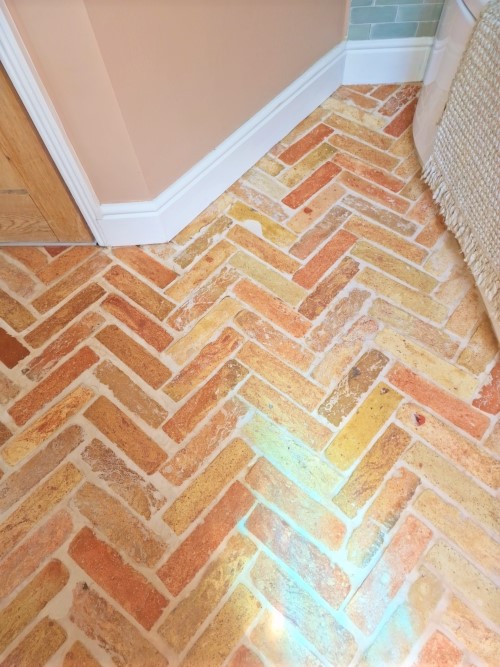
Once it had dried the floor was then sealed using Tile Doctor Colour Grow which is a colour enhancing product that as the name suggests improves colour in the tile, it’s also an impregnator which works by occupying the pores in the brick protecting it from within.
 
Brick Slip Tiled Bathroom Floor After Cleaning Saxilby Brick Slip Tiled Bathroom Floor After Cleaning Saxilby

The client was over the moon and said that is how they wanted it to look originally. For cleaning I made the client aware of the problem of using harsh cleaning products on sealed tiles and advised them to use Neutral Tile Cleaner which is a mild but effective cleaner that won’t erode the sealer with regular use.

Friday, January 13, 2023

Floor Tile Cleaning Expert Demonstrates how to Renovate Quarry Tiles in Stoke-on-Trent

The Red Quarry tiled floor shown below are from the hallway of a house in the village of Barlaston that dates to the early 1900’s. Hallways get a lot of use and over the years the tiles had seen a lot of wear and were now looking patchy with various levels of staining and dirty grout.

Quarry Tiled Floor Barlaston Before Cleaning

After surveying the floor and running a few tests I was able to give the homeowner a quote for the work which would take two days, the first to clean and the second to apply a sealer that would protect the tiles from staining going forward. Happy with the quote we scheduled a date for the work to commence.

Deep Cleaning a Quarry Tiled Hallway in Barlaston

To clean up the tiles I applied a strong dilution of Tile Doctor Pro-Clean which is our go to tile and grout cleaning product. Its best to leave it on the tile and grout for ten minutes or sometimes longer to give it time to break down the dirt and coatings. The floor was then scrubbed with a rotary machine fitted with a poly brush attachment and a stiff grout brush along the grout lines.

The combination of the cleaning agent and mechanical scrubbing releases the dirt from the tile to the surface where its removed with a wet vacuum. Once the floor was clear the tiles were then inspected and the process repeated where needed.

Last step of the cleaning process was to treat the tiles to an acid wash with grout clean-up. I highly recommend this for old floors like this one which were installed before the invention of the damp proof membrane. The problem is without a DPM moisture can rise through the tiles and deposit salts on the surface of the tile as it evaporates, a process known as efflorescence. If you look closely at the photos above you can spot white staining as a result. As well as countering the alkaline salts the acid will also remove old grout smears and neutralise the use of the alkaline Pro-Clean used earlier.

After a final rinse and vacuum the Quarry tiles were left to dry off overnight.

Sealing a Quarry Tiled Hallway Floor in Barlaston

Applying sealer to a damp floor can result in a patchy appearance so on my return I first tested the floor with a damp meter to ensure it was dry. All was well so I able to move onto applying the sealer and for this floor I chose to use Tile Doctor Seal and Go.

Seal and Go works very well on Quarry Tiles improving their appearance and adding an appealing satin finish. The tiles really soaked up the sealer and I had to apply four coats before I was satisfied it was fully sealed.

Quarry Tiled Floor Barlaston After Cleaning

Once done the tiles were transformed and my client was very pleased with their new hallway floor. Before leaving I took time to discuss aftercare cleaning for which I recommend Tile Doctor Neutral Cleaner which is a gentle but effective product that won’t harm the sealer.

Source: Quarry Tile Cleaning, Restoration and Sealing Service in Stoke-on-Trent Staffordshire

Saturday, August 6, 2022

Gel Cleaning a Victorian Hallway Floor in Surrey

It had been a while since this Victorian tiled hallway at a property in Reigate had received a deep clean and re-seal and it was now looking quite unloved. The sealer had almost worn off and dirt had become ingrained in the pores of the tile leaving it dull and lifeless. Hallways floors receive a lot of foot traffic so do need regular attention if they are to look their best and this example was no different. 

Fortunately, the floor was intact with no broken or loose tiles to deal with, there were a few chipped tiles in the floor but I think that adds character to a floor of this age. I worked out a quote to deep clean the tiles, flush out the dirt and add a fresh sealer to protect them. The quote was accepted and a date set for the work to commence.

 
Victorian Tiled Hallway Floor Before Restoration Reigate

Deep Cleaning a Victorian Tiled Hallway Floor

I started the work by applying a generous coating of Tile Doctor Oxy-Gel and left it to soak into the pores of the Victorian tiling for around 30 minutes. I used Oxy-Gel so as to minimise the use of water which can exacerbate efflorescence salt issues which is a typical problem of floors of this age that don’t have the benefit of a damp proof membrane.

Then using a very coarse 100-grit diamond encrusted pad attached to a rotary floor machine the tiles were given a good scrub. This process skims away a small layer off the surface of the tiles to remove the dirt and old coatings such as sealers. All the soil was extracted from the floor using a wet vacuum and I repeated this process twice for maximum effect.

At this point the tiles were already looking significantly better but I hadn’t finished yet. I still needed to deal with the edges and corners where the pad can struggle to reach. For this I use handheld burnishing blocks and more Oxy-Gel, you need a lot of elbow grease to do this but its an important step and can also be used to deal with any stubborn areas.

Once finished I used a little water to help rinse off the floor and the wet vacuum again to get the floor as dry as possible before leaving the floor to dry off completely overnight.

Sealing a Victorian Tiled Floor

The tiles need to be dry before sealing so the next day my first action was to test the floor for moisture using a damp meter. They passed and were ready to take a sealer which for this floor I used Tile Doctor seal and Go Extra. It's super tough and ideal for doorways and hallways and leaves a nice sheen without being too shiny.

 
Victorian Tiled Hallway Floor After Restoration Reigate

Before leaving I left advice on how to maintain the tiles using Tile Doctor Neutral Tile Cleaner which is a gentle tile cleaning product that will clean the floor without impacting the sealer which can be a problem with many of the strong products you find in supermarkets.

Sunday, December 19, 2021

Damaged Classic Tiled Hallway Floor Fully Restored in Lancashire

Cleaning and Repairing a Victorian Tiled Hallway Floor

Detailed below is the restoration of a Victorian tiled hallway floor that we started back in June in Preston. Although we started in June there was so much damage to the subfloor and the tiles it took some time to complete, additionally, the client did not like the colour samples of the replacement tiles we had brought along and so decided to source their own which took some time.

 
Damaged Victorian Tiled Hallway Floor Before Restoration Preston


Deep Cleaning a Victorian Tiled Hallway

Three months later with replacement tiles now sourced we were given the go ahead to start the restoration. The first day’s focus was cleaning the original floor using very coarse 100-grit and 200-grit Diamond pads fitted to a rotary buffer machine and applied to the floor using a strong dilution of Tile Doctor Remove and Go to add extra cleaning power. Tile edges were given special attention using a flex machine fitted with small diamond grit pads.

 
Damaged Victorian Tiled Hallway Floor Before Restoration Preston

The floor was rinsed with water to remove the soil generated and this was followed up with an acid rinse using a 1:3 dilution of Tile Doctor Grout Clean Up. This last step in the cleaning process is especially recommend for old floors like this which don’t have a damp proof membrane and can suffer from efflorescence issues.


Replacing Damaged Victorian Tiles

The next stage focused on repairing the floor and started by carefully knocking out all the broken and chipped tiles. We had previously estimated over 30 tiles needed replacing and so the client had bought two boxes, meaning I had plenty of spares to work with.

Before tiling however, the subfloor had suffered over the years and needed attention first. To deal with this the damaged areas were raked out, cleaned up and then back filled with rapid setting self-levelling screed from Mapie adhesives. Once the sub-base was fixed then we put the new tiles back in, they were not an exact match, about 5mm too short and lighter in tone, but the colour was pretty close.

Tiling an old Victorian floor like this can be a bit like dominoes as you move one out of place 2 decent ones come loose and then they also need refixing. Some of the tiles had hair line cracks in them and once they were loose, they just cracked in half. As such the 20 spare tiles that I thought were spare came into good use and I actually ended up using all of them. I could have done with a few more so it was decided to reset the last four broken tiles and grout them in. Luckily for me the client was very understanding about the nature of tile restoration and had accepted that there would be some imperfections and they were not expecting a new floor.

The Tiles were fixed down using Ultralite Rapid Flex (another product from Mapie) and then grouted using the same adhesive (not a grout, as they did not have grout back in the day, just cement and screed).

The floor was left this to cure overnight, and we came back the next day to finish the clean using a 200-grit diamond pad fitted to a buffing machine and lubricated with water, then one last acid rinse to get the tiles as clean as possible and remove any lingering grout haze. This last clean helps to blend the new tiles in with the original.


Sealing a Victorian Tiled Hallway Floor

Before applying a protective sealer, the floor was left to dry for a couple of days, the tiles need to be thoroughly dry before sealing or you can end up with a patchy appearance.

For this floor with no damp proof membrane, it was important to use a fully breathable sealer that will allow moisture to rise through the tile and evaporate at the surface, so Tile Doctor Colour Grow was chosen. This is a good choice for old floors like this as its fully breathable, head wearing, and it contains a colour enhancer that improves the overall appearance of the tile.

 
Damaged Victorian Tiled Hallway Floor After Restoration Preston

Three coats of Tile Doctor Colour Grow which is a fully breathable, colour enhancing sealer hat works by soaking into the pores of the tile protecting it from within. It has a matt finish, and it works really well with all clay tiles and is ideal for these types of floors.

 
Damaged Victorian Tiled Hallway Floor After Restoration Preston

You can probably spot the lighter coloured tiles in the after photos on this page, however it’s a very subtle difference and I think they have blended in quite well with the original. Certainly, my client was very pleased with the newly restored floor, its completely transformed from when we first visited the client, and the floor has now gained character and history. For aftercare we recommend Tile Doctor Neutral Cleaner, its an effective pH neutral product that is compatible with the new sealer.


Tuesday, November 24, 2020

How to Renovate a Quarry Tiled by Northamptonshire Tile Doctor

The following photos are of a Quarry tiled dining room floor in a period cottage located in the small village of Bozeat. My customer had removed a carpet and discovered them underneath, as you can see from the photographs however the tiles were in a poor state of repair. Undaunted the owner wanted to restore them as a lovely period feature and contacted Tile Doctor.

 
Quarry Tile Floor Before Restoration Bozeat Cottage Quarry Tile Floor Before Restoration Bozeat Cottage

I went over to survey the Quarry tiles and could see the floor had not faired well under the carpet over the years, several tiles were cracked and 40 to 50 tiles were loose and would needed resetting to stop them moving underfoot, especially in the high traffic areas. I discussed with them that Tile Doctor could repair the floor and clean it and would be able to restore in a few days. They were happy to go ahead with my quote and we arranged a mutually convenient time to carry the work out.


Cleaning and repairing a Quarry Tiled Hallway Floor

My first course of action was to deep clean the floors using Tile Doctor Oxy-Gel which is an alkaline cleaner. Working in small areas the Gel was worked in using a stiff brush on a rotary machine using a little water. As this process was completed in each area, I rinsed off the resulting slurry away with water and then extracted using a wet vacuum. The initial clean removed most of the black staining and paint spots which had occurred over the years, but more work was needed.

The next step was to apply Tile Doctor Grout Clean-Up to further clean up the tiles and tackle the cement residue and other staining. I used a repeat of the cleaning process and rinsed twice with plain water to ensure all traces of product were removed. The next step was to tackle the broken and loose tiles however it was now the end of day one, so after assessing the floor for all repairs required, I installed a portable dryer to aid drying and left for the day.

 
Quarry Tile Floor During Repair Bozeat Cottage Quarry Tile Floor During Repair Bozeat Cottage

The next day I returned to begin repairs starting by lifting all the loose tiles, working in one square metre sections at a time. Fortunately, my customer had already managed to obtain reclaimed tiles from a reclamation yard so that saved me a job. The colours matched with the originals; however, the reclaimed tiles were slightly larger than the originals and needed to be cut into shape as required. Working methodically, I re-laid the tiles on a fresh bed of screed and grouted them in to match the original floor as best possible.

 
Quarry Tile Floor During Repair Bozeat Cottage Quarry Tile Floor During Repair Bozeat Cottage

After the repairs were completed I allowed the floor to fully dry for four days, I needed the tiles dry and the newly laid adhesive and grout to set and bed in before the next step. Before leaving I gave my customer strict instructions not to walk over these areas whilst I was gone.


Sealing a Quarry Tiled Hallway Floor

Returning later the following week, I first checked the floor was dry using a damp meter, once satisfied I was able to start the sealing process. The customer had requested a silk finish, however because of the age of the cottage and the possibility of damp in this old floor my choice of sealer was limited to those that are fully breathable.

 
Quarry Tile Floor After Restoration Bozeat Cottage

On this occasion I chose to apply several coats of Tile Doctor Seal & Go Extra, this product will allow the floor to breathe and provide the desired finish. It was a good decision, and as hoped it enhanced the appearance of the floor beautifully.

 
Quarry Tile Floor After Restoration Bozeat Cottage

My customer was very happy with the renovation and the transformed floor and left the following feedback:

 
"Friendly service, reasonably priced and a good standard of work. Has breathed new life into my old quarry tile floor."


Source: Quarry Floor Restoration in South Yorkshire

Monday, June 29, 2020

Improving a Balcony With Encaustic Cement Tiles in East London

This client from Hackney had started a DIY tiling job using modern Encaustic Cement tiles on an external balcony. The COVID-19 lockdown had just taken effect and it seemed like a great opportunity to get a few DIY projects done. Although it started off well, she began to struggle when having to cut the edging tiles and corners so was forced to leave the tiling incomplete and un-grouted. Furthermore, she had attempted to seal the tiles, but this had somehow caused the tiles to go milky white. Encaustic tiles date back to medieval times and have been popular in the UK since the nineteenth century and have become extremely popular here in the last few years.

Encaustic Cement Balcony Tiling Project in Hackney Before

Concerned the whole project would need ripping up and starting again she contact Tile Doctor and I arranged a visit to the property to assess the tiling and see if the project it could be rescued. Since the COVID-19 epidemic began we have adopted new working practices such as more PPE and Social Distancing to allow us to continue working.

Encaustic Cement Balcony Tiling Project in Hackney Before

We test cleaned the sealer and found the application of a 400-grit diamond pad was the best way to clean off the sealer and renovate the tile. Additionally, we had been asked to complete the tiling project which was approx. 24m2. The job would therefore entail tiling, cleaning, and sealing so it took a little while to calculate the quote which was accepted.

Cleaning/Repairing an Encaustic Cement Tiled Balcony

There was a lot of work to do and so I teamed up with fellow Tile Doctor Andrew Newstead for this job working as a two-man team. It took three days to complete the tiling and the grouting, then we returned the following week to allow the adhesive and grout to fully dry over the weekend. The next step was to clean the area the customer had previously laid and sealed to remove the old sealer that had damaged the colour and look of the tiles. For this we used water and a series of 400, 800 and 1500-grit diamond pads. This gradually removed the sealer and brought the tiles back to a more natural finish. We suspect the reason her tiles went milky was she hadn’t buffed off the excess sealer but luckily, we were able to fix it.

Sealing an Encaustic Cement Tiled Balcony

We then returned for one more morning, buffed tiles with a 3000-grit pad to further enhance their appearance and then seal with two coats of Tile Doctor Colour Grow. Colour Grow is an impregnating sealer that improves colour and works by soaking into the pores of the tile preventing dirt from becoming ingrained there.

Encaustic Cement Balcony Tiling Project in Hackney After Encaustic Cement Balcony Tiling Project in Hackney After

I’m pleased to say the whole job went smoothly and our client was pleased (see feedback below) that they could finally use their balcony which I’m sure has been in constant use since.

Plenty of problems to solve with my half-finished roof terrace, which were solved cheerfully and carefully. By Gemma M, Hackney, 27 May 2020


Source: Patio Tile Cleaning and Renovation Service in East-London

Thursday, February 27, 2020

How to Rebuild and Restore a Victorian Tile Floor

The photos below are of a 1.7 metre by 3 metre Victorian tiled floor at the entrance to a property in Prizet, south of Kendal. As you can see the hallway and porch was in a poor state due to old age and neglect. Some tiles were cracked, missing and stained with cement, and what I suspect was carpet adhesive. One of the tiles had a four-inch hole down to the cellar where a soil pipe was installed previously when the room was used as a downstairs W.C. The client was doubtful that we would be able to restore the floor but thought it would be worth contacting us just in case.

Victorian Tiled Entrance Floor Before Rebuild Prizet Kendal Victorian Tiled Entrance Floor Before Rebuild Prizet Kendal

I visited the property to take a proper look and found their description of the floor was accurate and clearly overdue some serious attention. I also noticed that some point in the past cracked tiles had been removed and replaced with cement. However, I was confident the floor could be restored and gave them a price for the restoration which they were happy to proceed with.

Victorian Tiled Entrance Floor Before Rebuild Prizet Kendal


Repairing a Victorian Tiled Hallway Floor

Work started by rebuilding the worst part of the floor which would require the services of my partner Russell. This involved removing the existing tiles, then preparing the concrete base which needed to be level and smooth before we started tiling.

Victorian Tiled Entrance Floor During Rebuild Prizet Kendal

We had previously managed to source very similar tiles which would be needed to replace those that were missing or damaged. Once the floor was prepped, the replacements were cut to fit taking care to ensure they matched the original pattern. Once cut they were fixed in place with flexible adhesive. We recommend the use of flexible floor adhesive on old floors due to the potential movement and the flexible floor adhesive doubles up as a grout as well. The floor was then left overnight to dry.

Victorian Tiled Entrance Floor During Rebuild Prizet Kendal


Deep Cleaning a Victorian Tiled Hallway Floor

On day two the floor was deep cleaned using a 100-grit resurfacing pad followed by a 200-grit pad and then a 400-grit burnishing pad. The pads are attached to a rotary machine and the floor is rinsed with water and the soil extracted with a wet vacuum in-between.

We then finished the clean with an acid rinse using Tile Doctor Grout Clean Up. This is needed to remove the cement stains from the surface of the Victorian tiles and neutralise any potential efflorescent salt issues in the tiles. Another advantage is the acid slightly etches the tiles making a better bond with the sealer.

The floor was given another rinse with water and then the wet vacuum was pressed into surface again to extract the fluids and get the floor as dry as possible before leaving for the day.


Sealing a Victorian Tiled Hallway Floor

We returned on the third day and first checked the floor was fully dry using a moisture meter. Four coats of Tile Doctor Colour Grow were applied to achieve a strong enduring seal that will cope well with the traffic coming through the entrance.

Colour Grow is a colour intensifying sealer that provides durable surface protection to the tiles, but at the same time allows the surface to breath which is important in a floor such as this where no damp proof membrane is present. The results speak for themselves I was particularly happy with the area where we had repaired the hole, it was barely noticeable.

Victorian Tiled Entrance Floor After Rebuild Prizet Kendal

Many thanks to my customer for sending over the before photos and for leaving the following testimonial.

“Great restoration job done on our Victorian hall and porch tiles including replacing broken tiles and cleaning. Now looking better than ever. Russell was very professional and knowledgeable. Nicola F. Kendal”


Source: Victorian Tiled Floor Cleaning and Restoration Service in Cumbria

Thursday, January 23, 2020

How to Renovate a Victorian Tiled Hallway

Here’s the 2nd part of the floor restoration work I did for a property developer last year in Harborne, this time detailing the renovation of the Victorian tiled hallway floor. I must credit the builder for engaging me on this project as many builders would attempt this work themselves, rather call in a professional, which often leads to a less than desirable result.

Victorian Tile Hallway Before Renovation Harborne

The house dated from the 1800's and contained two old floors that needed restoration. I didn’t want to trample over a recently renovated hallway floor whilst rebuilding the old Quarry tiled floor in the front room so naturally I addressed that first. If you missed the first post detailing its restoration you can find it here: Victorian Quarry Tiled Floor Restoration in Harborne

Victorian Tile Hallway Before Renovation Harborne Victorian Tile Hallway Before Renovation Harborne

Once the front room restoration was complete, I moved onto the original Victorian Hallway which was dull, dirty and needed some tiling work around one of the door thresholds.

Victorian Tile Hallway During Renovation Harborne


Cleaning and Repairing a Victorian Tiled Hallway Floor

The Victorian Hallway needed to have a threshold restoring, luckily the builders had kept the original tiles. Firstly, the space below the tiles needed to be filled with quick drying cement. The tiles were then re set and grouted.

Victorian Tile Hallway After Renovation Harborne

Next issue was to tackle the paint spots and carpet adhesive. I did this by spraying the surface of the tile with a strong solution of Tile Doctor Remove and Go and after leaving to for ten minutes to soak in and soften the glue and paint. I was then able to carefully scrape of the glue and paint with hand scrapers. The floor was then deep cleaned with a 200-grit diamond pad on a weighted rotary machine. The edges and corners were done by hand with diamond blocks. The floor was then rinsed with water and the soil extracted with a wet vacuum. Last stage of the cleaning process was to give the floor an Acid Wash with Tile Doctor Grout Clean-Up to further clean up the floor and neutralise any efflorescent salts that may have been present in the tiles. Efflorescence can be a big problem for old floors like these which don’t have a damp-proof membrane. I gave the floor another rinse and extraction before leaving for the day and left the floor to dry out overnight.


Sealing a Victorian Tiled Hallway

On return both the floors were checked for moisture with a damp meter to ensure they were dry. The readings were good, so I proceeded to start the long process of applying the sealer. On this occasion I chose Tile Doctor Colour Grow sealer, main reasons being its fully breathable so will cope well with any moisture evaporation due to there being no damp-proof membrane also its really good at bringing out the colours in the tiles. Three coats were applied, allowing each coat to dry before applying the next. I then buffed off any excess with a white pad.
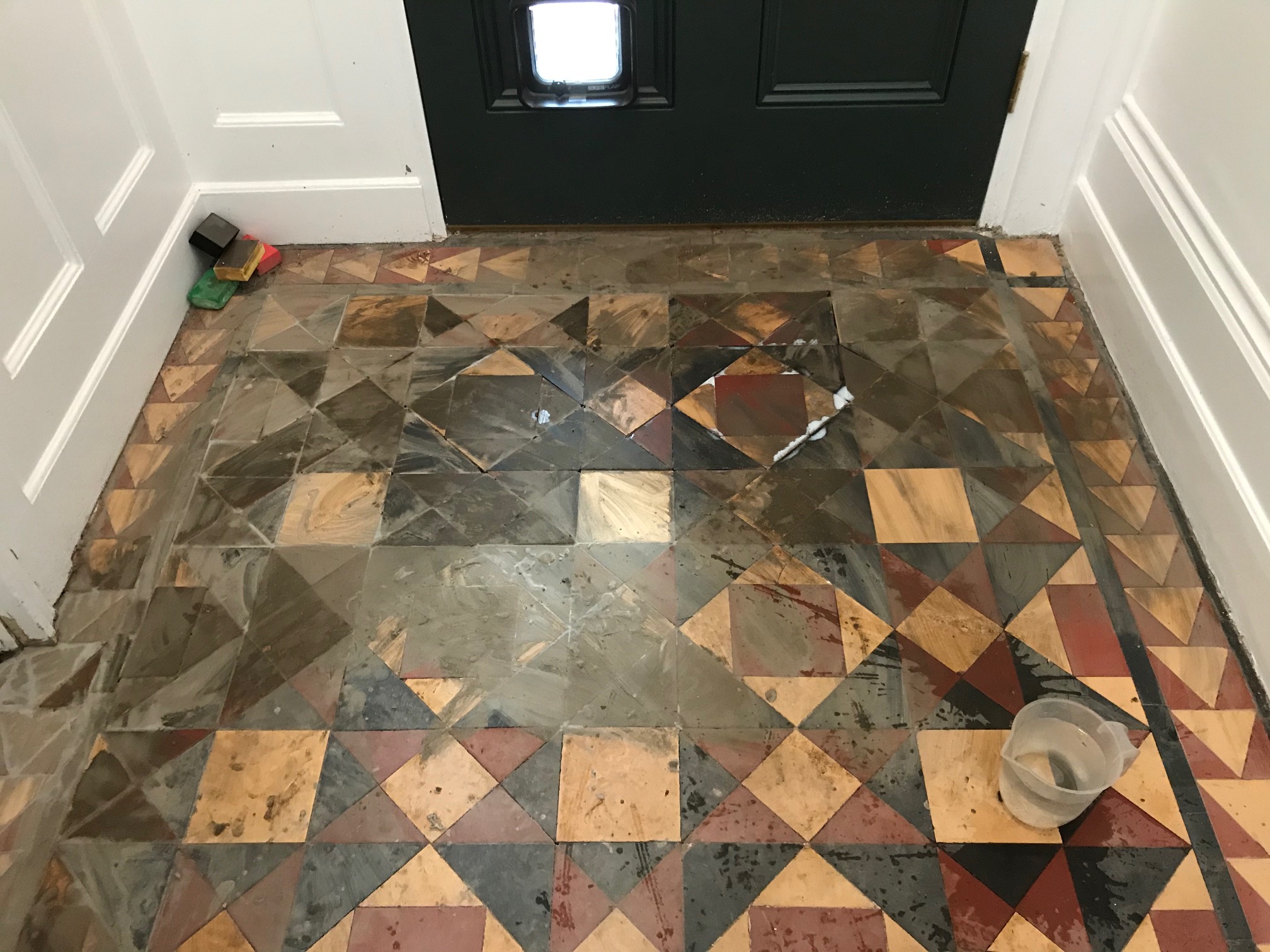
Victorian Tile Hallway After Renovation Harborne Victorian Tile Hallway After Renovation Harborne

The new sealer really brought the Victorian tiles to life and allowed the colour and geometric patterns in the Victorian hallway floor to shine through.

Victorian Tile Hallway After Renovation Harborne


Source: Victorian Floor Cleaning and Sealing Service in Birmingham